Play 3D chess against friends or challenge the AI using the Lewis Chessmen pieces.
The pieces are copies of the Lewis chessmen, carved from walrus ivory around 1150–1200 and found on the Isle of Lewis, Scotland, in 1831.
The pieces
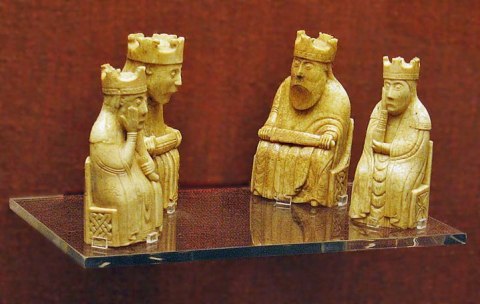
Pair of original Kings & Queens, British Museum
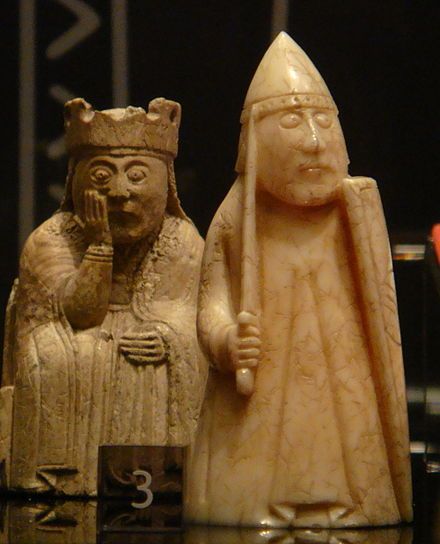
Lewis Chessmen pieces
Queen and Warder (rook)
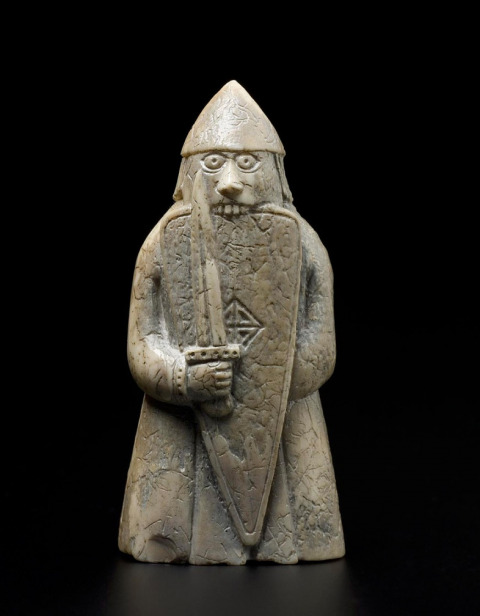
A Berserker (Rook) denoted by the way this figure is biting the rim of his shield.
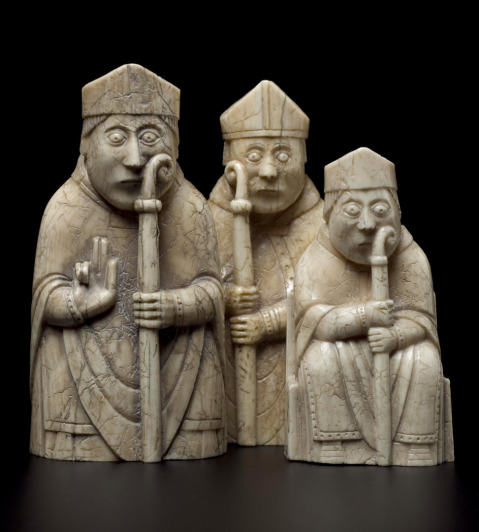
Collection of Bishops.
The Lewis chessmen, also known as the Uig chessmen, are a hoard of carved gaming pieces from the 12th century. They are named after the Isle of Lewis in the Outer Hebrides of Scotland, where they were dug up in 1831 in the parish of Uig. Most experts believe they were made between about 1150 and 1200, probably by craftsmen in Trondheim, Norway, at a time when the Hebrides were ruled by the Norwegian crown. The hoard held 78 chess pieces, 14 plain discs for backgammon-style games and a belt buckle. Today the British Museum in London looks after 82 of the objects, and the other 11 are on display at the National Museum of Scotland in Edinburgh.
Nearly every piece is carved from walrus tusk ivory, with a few made from whale teeth. In all, 79 Lewis chess pieces are known: eight kings, eight queens, 16 bishops, 15 knights, 13 warders (rooks) and 19 pawns. The newest of these is a warder that turned up in Edinburgh in 2019, decades after it had last been recognised, and sold at auction for £735,000. Apart from the pawns, which are simple geometric shapes 3.5 to 5.8 cm tall, every piece is a small carved figure between 7 and 10.2 cm high. Because there are more pawns than one game needs, and their sizes vary so much, historians think the pieces came from at least four or five separate sets.
The carvings are full of character. The knights sit on short, sturdy horses and carry spears and shields. The warders are foot soldiers armed with swords and shields, and four of them are berserkers: wild-eyed warriors biting the tops of their shields in a battle rage. When the hoard was found, some pieces still showed traces of red colouring, so the two armies may once have been red and white rather than the black and white of modern chess.
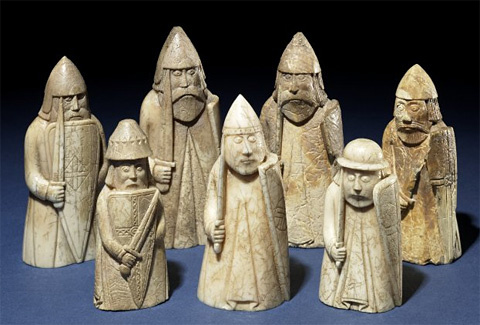
Collection of Warders (Rooks)
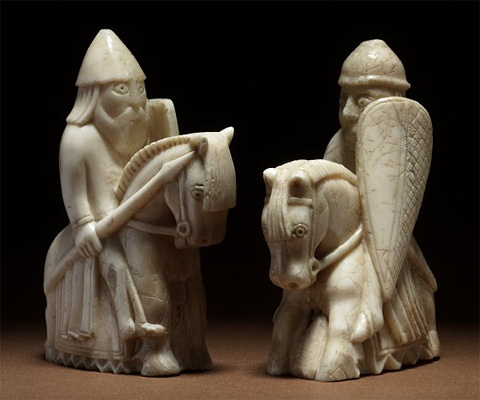
A couple of different Knight pieces, Note the short horses
Own a set of Lewis chessmen
Our workshop makes replicas of the Lewis chessmen in resin. Play them in 3D here, then put a set on your own table.
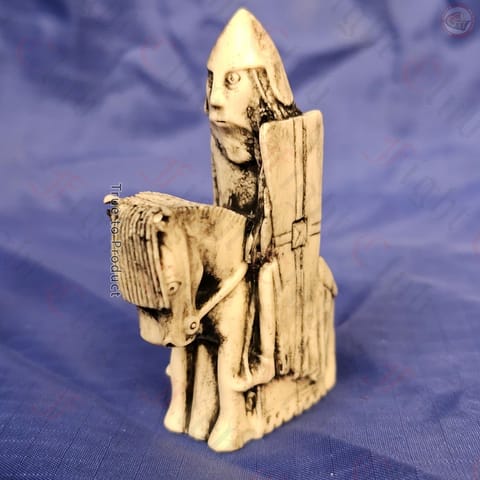
Lewis knight chess piece
A single Lewis knight on his short, sturdy horse, cast in resin and hand-painted in our workshop.
View in our shop ›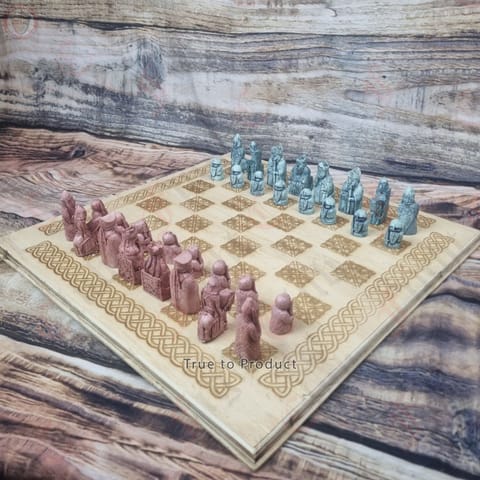
Lewis chess set and board
A full set of Lewis chessmen in two colours with a matching board, cast in resin and hand-painted.
View in our shop ›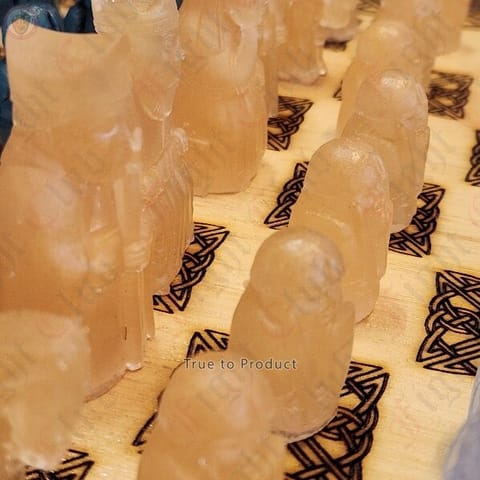
Resin Lewis chess pieces
Lewis chess pieces cast in translucent resin – a striking take on the medieval originals.
View in our shop ›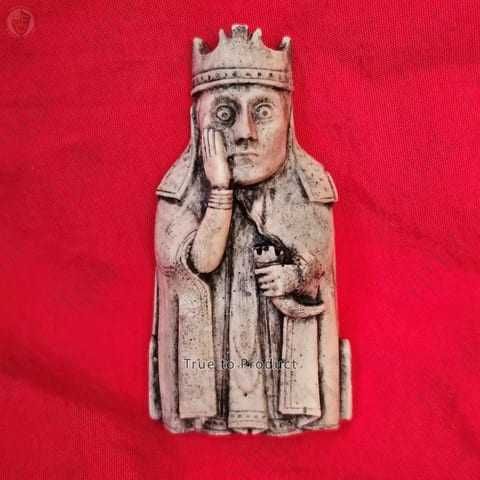
Facepalming queen magnet
The famous Lewis queen, hand on cheek, as a 6.5cm resin fridge magnet painted to look like old ivory.
View in our shop ›